
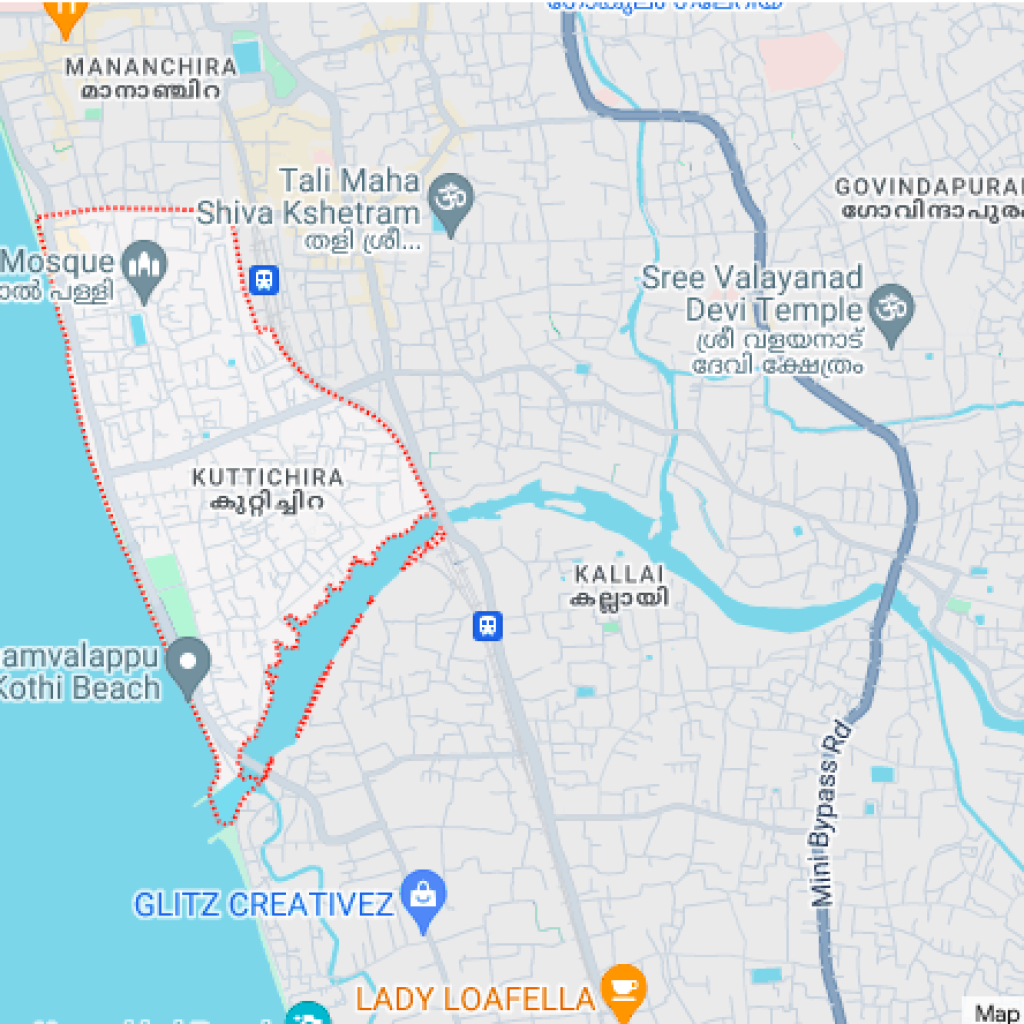
Thekkepuram (kuttichira), a culturally and historically rich village near Kozhikode, stands out for preserving its identity despite the rapid modernization surrounding it. Nestled amidst water bodies, this charming village is bordered by the Arabian Sea to the west, the Kallayi River to the south, Kozhikode city to the east, and the fishing village of Vellayil to the north.
Places of Interest
Thekkepuram is home to several ancient buildings that reflect the brilliance of medieval Kerala architecture. Notable among these are the tharavads—ancestral homes—alongside mosques and other historical structures. One can visit the large Chira (pond), with stone steps leading to the water, located in the Kuttichira region. Surrounding this pond are old laterite benches where the Zamorin, once a local ruler, made official proclamations. The Mishkal Mosque, Jama Pally, and Muchundipally are some of the historically significant mosques, known for their intricate architecture.
Adding to the village’s natural beauty is the Kallayi River, which flows to its south. A British-built railway bridge spans the river, further enhancing the scenic landscape. Nearby, the historic Big Bazaar and Copra Bazaar were once thriving trading hubs in Kozhikode. Another highlight is Thekkepuram beach, where visitors can enjoy sunsets, the cool breeze, and visit the nearby port lighthouse.
Social Life and Economic Activities
The majority of Thekkepuram’s residents belong to the Muslim community, with the prominent Kozhikode Koyas playing a key role. Traditionally traders of timber, copra, and rice, they have long contributed to the region’s commercial prosperity. Their trade extended to the Middle East, and today many from the community continue to engage in business abroad, especially in the Gulf. Historically, Thekkepuram’s traders had a strong influence in Kozhikode’s markets, particularly the Big Bazaar. The village is also renowned for its communal harmony.
Tharavads and the Matriarchal System
Some of the tharavads in Thekkepuram are centuries old, featuring up to 40 bedrooms to house extended families under one roof. The joint family system remains strong, and the community follows a matriarchal lineage, tracing descent through the daughters. These ancestral homes are fine examples of Kerala architecture, with their slanting tiled roofs, inner courtyards, wooden windows, benches, and wells. The traditions and values of the past still thrive within the walls of these historic homes.